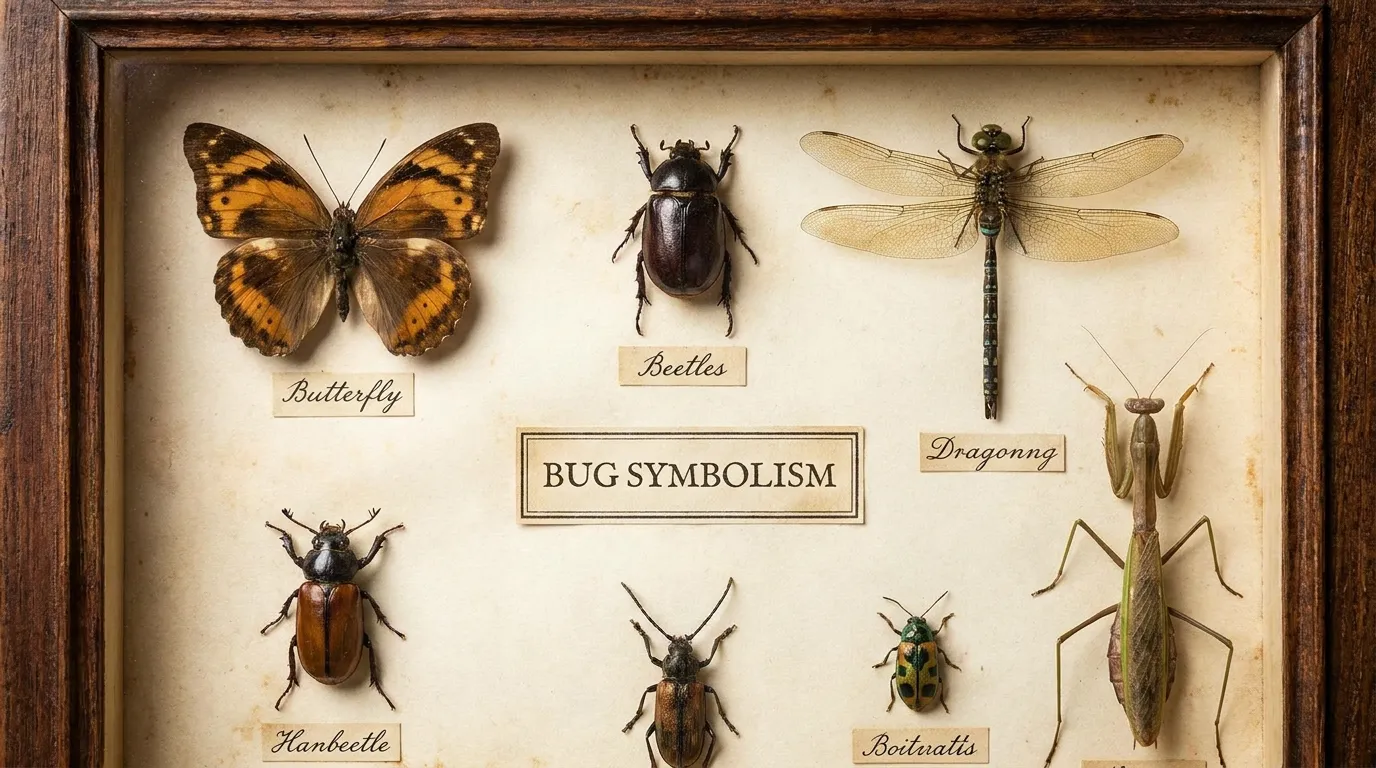
Have you ever noticed a tiny bug appearing at a strange or meaningful moment? Maybe a small insect landed near you while you were thinking about an important decision. Perhaps a lightning bug appeared during a difficult evening, or a June bug kept showing up around your home.
For many people, these small encounters feel more meaningful than they first appear. Bugs are easy to overlook, yet they are everywhere around us.
They survive, adapt, transform, and continue moving even when life becomes difficult. Because of this, insects have gained many symbolic meanings across cultures, spiritual traditions, stories, and personal experiences.
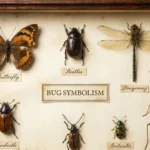
Bug symbolism can represent transformation, persistence, protection, change, hidden emotions, or even things we would rather avoid. The meaning often depends on the type of insect, the situation, and the feelings you experienced when you saw it.
It is important to remember that spiritual symbolism is personal rather than a proven prediction of the future. A bug does not have to carry a supernatural message. Still, noticing one can become a beautiful opportunity to pause, reflect, and understand what is happening inside your heart.
Bug Symbolism Spirituality
In spiritual traditions, insects often symbolize transformation, resilience, patience, and renewal. Their small size can also remind us that something does not need to be large to have an important role.
Many insects go through dramatic changes during their lives. A caterpillar becomes a butterfly, while other insects move through eggs, larvae, and adult stages. This natural process can inspire people to think about their own personal growth.
Seeing a bug may therefore remind you that change is normal.
If you have been going through a difficult period, an insect encounter may encourage you to keep moving. You may not see the final result yet, but growth can happen quietly.
Bugs can also symbolize adaptability. They live in many environments and find creative ways to survive. Spiritually, this may represent your ability to adjust when life does not go according to plan.
Another possible meaning is paying attention to the small things. A tiny insect can easily go unnoticed, yet it may suddenly catch your attention. This can become a reminder to appreciate small moments, simple blessings, and quiet signs of progress.
For some people, bugs also represent hidden thoughts and emotions. Because insects often live under leaves, in soil, or in dark spaces, they can symbolize feelings that remain beneath the surface.
If you repeatedly notice bugs, instead of immediately assuming something mysterious is happening, ask yourself what was happening emotionally at that moment. Your own reaction may reveal more than the insect itself.
Insect Symbolism in Literature
Insects have played powerful symbolic roles in literature for centuries. Writers often use them because insects can represent ideas that are difficult to explain directly.
A small insect can represent weakness, persistence, freedom, fear, transformation, or social pressure. Its meaning changes according to the story.
One famous example is the transformation of Gregor Samsa in Franz Kafka’s The Metamorphosis. Gregor wakes up transformed into a strange insect-like creature. The transformation becomes a powerful symbol of alienation, identity, family pressure, and isolation.
In other works, butterflies represent beauty and transformation. Bees can represent cooperation, productivity, and organized communities. Spiders may symbolize patience, creativity, or fear.
Insects can also be used to show the difference between the individual and society. A single insect may be tiny, while a swarm can become powerful. This contrast allows writers to explore themes such as belonging, control, community, and individuality.
Literary insect symbolism also reminds readers that appearances can be misleading. Something considered ugly or frightening may have an important purpose in nature.
When you encounter an insect in a story, it can help to ask:
- What emotion does the insect create?
- Is it connected to freedom or confinement?
- Does it represent transformation?
- Does the character fear or admire it?
- Does the insect reveal something hidden?
These questions can uncover deeper meanings beneath a simple description.
Insect Symbolism Negative
Not every insect carries a positive symbolic meaning. In many traditions and stories, insects can represent fear, irritation, decay, invasion, anxiety, or unwanted change.
A bug crawling into your personal space may feel uncomfortable. Symbolically, this can represent something in your life that feels intrusive.
For example, if you constantly feel overwhelmed by other people’s demands, an unwanted insect might remind you of the need for stronger boundaries.
Some insects are also associated with decay because they are found around dead plants, food, or organic material. Symbolically, this can represent the end of something that has already served its purpose.
This does not necessarily mean something bad is going to happen.
Instead, it may encourage you to release something old.
An insect that causes fear can also represent an emotion you have been avoiding. Perhaps you are afraid of making a decision, starting something new, or confronting an uncomfortable truth.
The negative side of bug symbolism can therefore become an invitation to look inward.
Ask yourself what the insect made you feel. Was it disgust, fear, curiosity, irritation, or surprise? Your emotional response may offer a useful clue about what the encounter means to you personally.
June Bug Symbolism
June bugs are often associated with summer, warmth, nighttime activity, and persistence. Their appearance during the warmer months can naturally connect them with renewal, energy, and seasonal change.
Symbolically, the June bug may represent persistence because it continues moving even when its path seems awkward or uncertain.
This can be a comforting message if you are currently struggling.
You do not always need to move perfectly. Sometimes continuing forward is enough.
The June bug can also symbolize attraction to light and activity. If one appears around your home at night, you might use the moment as a reminder to consider what you are moving toward.
Are you following something that genuinely brings you happiness?
Or are you simply following what looks bright from a distance?
Another interpretation involves patience. June bugs spend much of their life in stages that are less visible before becoming adults. This can symbolize the idea that important growth can happen quietly.
You may feel like nothing is changing in your life, while unseen progress is already taking place.
The June bug can therefore become a gentle reminder not to judge your journey too quickly.
Stink Bug Symbolism
Stink bugs are famous for their unpleasant smell when disturbed. Because of this unusual defense, they can symbolize boundaries, protection, self-defense, and emotional discomfort.
A stink bug may offer an interesting symbolic lesson: sometimes protecting yourself means creating distance.
You do not have to respond to every person, argument, or situation. You can step away when something repeatedly damages your peace.
The stink bug can also represent something unpleasant that demands your attention. Perhaps there is a conversation you have been avoiding or a situation that no longer feels healthy.
Its message can be interpreted as:
Notice what makes you uncomfortable, and do not ignore it forever.
At the same time, stink bug symbolism does not have to be negative. Its defensive behavior shows that even a small creature has ways to protect itself.
This can remind you that you are allowed to establish healthy boundaries.
You can say no.
You can take space.
You can protect your emotional energy.
If you see a stink bug repeatedly, consider whether you have been allowing someone or something to cross your personal boundaries.
Lightning Bug Symbolism
Few insects have a more naturally uplifting image than the lightning bug, also called a firefly. Its tiny light appearing in darkness makes it a powerful symbol of hope, guidance, wonder, and inner light.
A lightning bug does not need to illuminate the entire world. Its small glow is enough to be noticed.
This can represent an important spiritual lesson.
You do not have to solve everything at once.
Sometimes you only need enough light to take the next step.
For someone going through grief, uncertainty, loneliness, or a major life change, seeing a firefly may feel deeply comforting. It can become a personal reminder that darkness does not mean light has disappeared forever.
Lightning bugs can also symbolize connection. Their flashing patterns help them communicate with one another. Symbolically, this can represent the importance of reaching out instead of keeping everything inside.
If you have been feeling alone, the firefly can inspire you to reconnect with someone you trust.
Its message can be simple:
Your light does not need to be huge to matter.
Real-Life Scenarios
Scenario 1: A Bug During a Difficult Decision
Imagine someone sitting outside after a stressful day, wondering whether to leave an unhealthy situation. A small insect lands nearby.
The insect itself may have no supernatural connection to the decision. However, noticing it gives the person a moment to pause.
They realize they have been ignoring their own feelings for months.
The symbolic lesson becomes self-awareness and courage.
Scenario 2: A Firefly After Loss
Someone grieving a loved one walks outside on a summer evening and notices several fireflies.
The lights remind them of childhood memories and happier moments.
Rather than treating the fireflies as proof of a supernatural message, they allow the experience to become a personal symbol of love and remembrance.
The moment brings comfort and peace.
Scenario 3: A Stink Bug and Personal Boundaries
Someone repeatedly encounters stink bugs during a period when they feel emotionally exhausted by another person’s demands.
The encounter encourages them to think about boundaries.
They realize they have been saying yes when they really wanted to say no.
The bug becomes a personal reminder that protecting your peace is not selfish.
FAQs About Bug Symbolism
1. What does bug symbolism mean spiritually?
Bug symbolism can represent transformation, persistence, adaptation, protection, hidden emotions, and renewal. The meaning depends on the insect and the personal situation surrounding the encounter.
2. Is seeing a bug a spiritual sign?
It can feel meaningful to you, but there is no universal proof that seeing a bug is a supernatural sign. You can treat the experience as an opportunity for reflection without assuming it predicts the future.
3. What does a lightning bug symbolize?
A lightning bug commonly symbolizes hope, inner light, guidance, communication, wonder, and finding brightness during difficult times.
4. What does a stink bug symbolize spiritually?
A stink bug can symbolize boundaries, self-protection, discomfort, and the need to defend your emotional space. Its meaning may be especially relevant when you are dealing with stressful relationships or situations.
5. What does it mean when I keep seeing bugs?
Repeatedly seeing bugs may simply be connected to your environment or season. If the encounters feel personally meaningful, consider what you were thinking or feeling each time. The pattern may help you reflect on themes such as change, fear, protection, or personal growth.
Conclusion
The smallest creatures can sometimes inspire the biggest questions.
A bug may seem insignificant at first, but nature has a way of reminding us that every living thing has a purpose. Insects survive through change, adaptation, patience, and persistence. Their lives can mirror our own struggles in surprisingly meaningful ways.
Bug symbolism is not about finding one fixed answer for every encounter. A June bug may remind one person of persistence, while a lightning bug may represent hope for another. A stink bug may encourage someone to establish boundaries, while an insect in literature may reveal hidden fears or social pressures.
The most meaningful interpretation is often connected to your own emotional experience.
If a bug appears during a difficult moment, pause. Take a breath. Notice what you were thinking about. Ask yourself what needs attention in your life.
Maybe you need to let go.
Maybe you need to protect your peace.
Maybe you need to accept change.
Or maybe you simply need to remember that even during dark seasons, small signs of beauty can still exist.
You do not have to understand everything today. Like many insects, you can move through life one stage at a time. Growth can be quiet. Healing can be slow. Hope can be tiny and still be powerful.
Let the next small encounter remind you that your journey does not have to be perfect to be meaningful. Sometimes the smallest moment is enough to help you stop, reflect, and find your way forward.

Ethan Brooks is an animal symbolism writer who researches the meanings associated with birds, mammals, insects, reptiles, and other creatures. His work at Rankovistor explores how animals have been represented in folklore, mythology, literature, art, and cultural traditions. Ethan covers both familiar animals and unusual creatures, helping readers understand why particular animals have become associated with qualities such as strength, freedom, wisdom, transformation, protection, or mystery. His writing emphasizes context because animal symbolism can differ significantly between cultures and traditions. Ethan’s goal is to provide clear, informative explanations while distinguishing established cultural associations from modern interpretations.