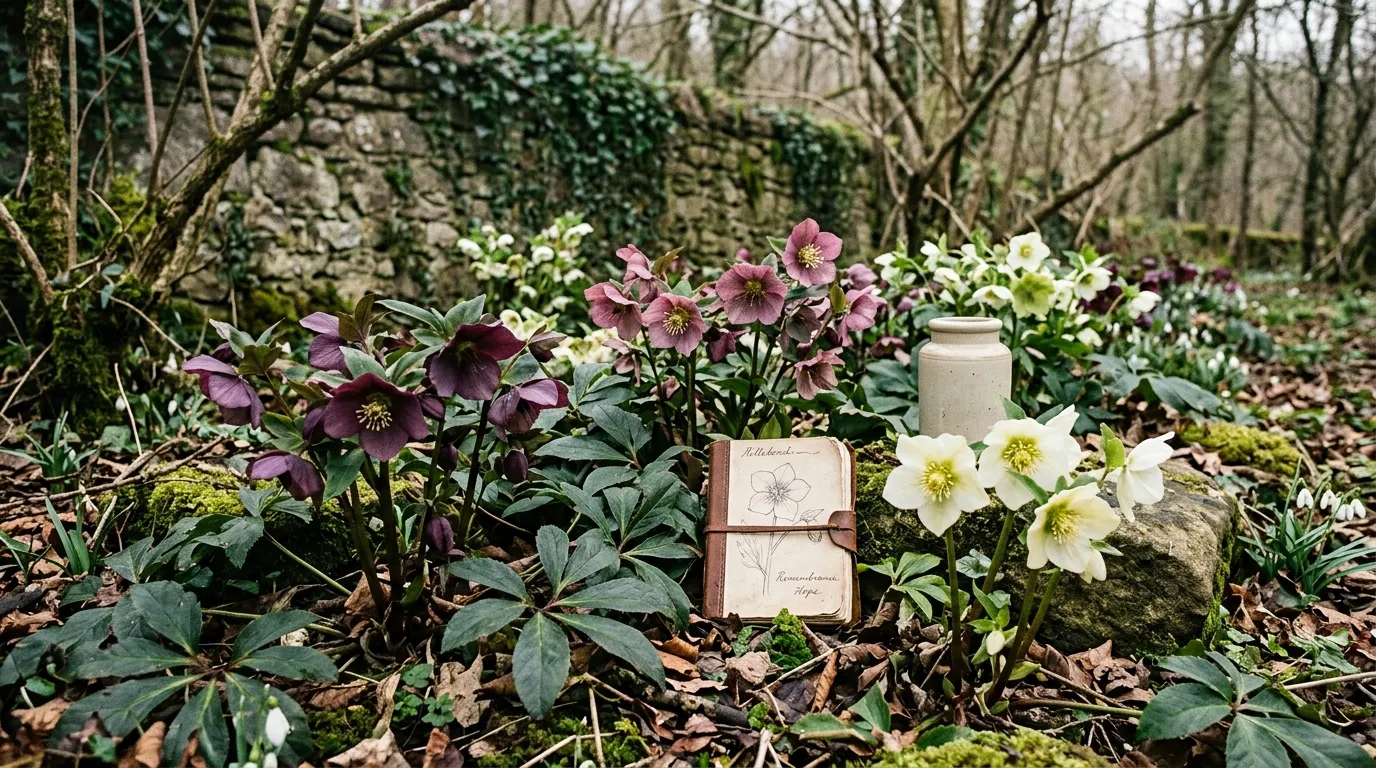
Have you ever noticed a hellebore blooming when most of the garden still looks quiet and lifeless? Its delicate flowers can appear during the coldest part of the year, almost as if the plant is quietly reminding us that life can continue even when everything feels difficult.
Hellebores are unusual flowers. They can bloom through winter, survive cold conditions, and return year after year. Because of these qualities, people have connected them with strength, hope, protection, renewal, and inner courage.
The meaning of a hellebore can also change depending on its color and the situation in which you encounter it. A dark flower may feel mysterious and protective, while a green flower can suggest healing and fresh beginnings. A red hellebore may represent deep emotion, and a yellow one can bring thoughts of happiness and light.
If you have recently noticed this flower repeatedly, given it to someone, dreamed about it, or simply felt strangely drawn to it, exploring its symbolism can offer an interesting way to reflect on your own emotions and life journey.
Black Hellebore Symbolism
Black hellebores are often associated with mystery, protection, transformation, and hidden strength. Their dark appearance can make them feel more mysterious than brightly colored flowers.
Symbolically, black does not always mean something negative. In many spiritual traditions, darkness can represent the unknown, the hidden parts of ourselves, or a period of deep inner change.
Black hellebore symbolism may therefore connect with a person who is going through a quiet transformation. You may not see the results of your growth yet, but something inside you could already be changing.
The flower can also represent emotional protection. Sometimes we need healthy boundaries before we can heal. A black hellebore can serve as a symbolic reminder that protecting your peace does not make you cold or selfish.
Its winter-blooming nature adds another layer. The flower appears when many plants are resting, suggesting that strength can exist even during difficult seasons.
If you encounter a black hellebore during a challenging time, you might see it as a reminder to remain patient. Not every transformation happens loudly. Some of the most important changes happen quietly.
Hellebore Symbolism Yellow
Yellow hellebores can be connected with joy, warmth, optimism, friendship, and emotional brightness.
Yellow is commonly linked with sunlight and positive energy. When applied to hellebore symbolism, this color can suggest hope returning after a period of sadness or uncertainty.
A yellow hellebore may symbolically encourage you to notice small sources of happiness. You do not always need a huge life-changing event to feel hopeful. Sometimes a simple conversation, peaceful morning, kind person, or new opportunity can bring light back into your day.
This flower can also represent friendship and cheerful connection. If you see a yellow hellebore while thinking about someone, you might associate it with the happiness that person brings into your life.
On an emotional level, its message can be simple:
There is still light here. Look for it.
For someone recovering from disappointment, yellow hellebore symbolism may represent optimism after difficulty. It does not promise that every problem will disappear. Instead, it can remind you that difficult emotions do not have to control your entire future.
Green Hellebore Symbolism
Green hellebores naturally bring associations with growth, healing, renewal, balance, and fresh beginnings.
Green is strongly connected with nature. It reminds us of leaves, forests, springtime, and the process of life continually starting again.
Because hellebores can bloom during cold seasons, green hellebore symbolism can have a particularly powerful meaning. It combines the ideas of growth and endurance.
You may be going through a period when progress feels slow. Perhaps you are healing from an emotional experience, starting a new chapter, or trying to rebuild your confidence.
The green hellebore can symbolically say:
Growth does not have to be fast to be real.
Its symbolism may also relate to emotional balance. Green sits between extremes and can represent finding a calmer middle ground.
If you have been giving too much energy to work, relationships, worries, or responsibilities, the flower can become a gentle reminder to return some attention to yourself.
Green hellebore symbolism is therefore especially meaningful for people seeking healing, stability, patience, and renewal.
Hellebore Symbolism Spiritual
From a spiritual perspective, hellebore symbolism often centers on resilience, hope, protection, rebirth, and courage during difficult seasons.
One of the most striking qualities of the hellebore is its ability to bloom during winter. This naturally creates a powerful metaphor for the human experience.
Life also has winters.
There may be moments when you feel tired, uncertain, lonely, or emotionally stuck. During those times, it can seem as though nothing is growing. Yet beneath the surface, important changes may still be taking place.
The hellebore reminds us that quiet seasons are not necessarily empty seasons.
Spiritually, encountering a hellebore may encourage you to trust your own ability to survive difficult periods. It can symbolize the strength that appears when circumstances are not easy.
Some people may also view the flower as a symbol of protection. Its historical associations with healing and its unusual appearance have helped create an image of a plant connected with guarding against unwanted influences.
However, spiritual symbolism is personal. There is no single universal message that a hellebore must represent. Your feelings, circumstances, beliefs, and the situation surrounding the encounter matter.
If the flower makes you feel peaceful, its meaning may relate to comfort and healing. If it makes you feel curious, it might symbolize discovery and transformation. If you notice it during a difficult period, you may naturally connect it with endurance and hope.
The most valuable part of spiritual symbolism is often the reflection it creates within you.
Red Hellebore Symbolism
Red hellebores can symbolize love, passion, courage, strong emotions, and the power of the heart.
Red is an intense color. It can represent romantic love, but it can also represent determination, life force, bravery, and emotional honesty.
Red hellebore symbolism may therefore speak to situations where feelings are difficult to ignore.
Perhaps you care deeply about someone. Perhaps you are finally ready to pursue a dream. Or perhaps you have been holding back an emotion that needs to be acknowledged.
The flower can serve as a reminder that strong feelings are not automatically weaknesses. They can provide information about what matters to you.
At the same time, red can encourage balance. Passion without wisdom can become overwhelming. Courage does not mean acting without thinking. Healthy emotional strength means understanding your feelings while choosing your actions carefully.
A red hellebore can therefore symbolize the meeting point between heart and courage.
If you are entering a new chapter, its symbolism may encourage you to move forward with confidence while remaining true to your values.
What Hellebore Can Symbolize in Your Life
Hellebore symbolism can take different forms depending on what is happening in your life.
For one person, it may represent survival after a painful period. For another, it may represent a new relationship, a fresh beginning, or the courage to change direction.
Its winter blooming makes it especially powerful as a symbol of hope.
The flower does not wait for perfect conditions.
That idea can be deeply comforting. We sometimes tell ourselves that we must have everything figured out before we begin. The hellebore offers another perspective: you can begin growing even when life is not perfect.
It can also represent patience. A seed does not become a flower overnight, and emotional healing rarely happens instantly.
If you are currently rebuilding your confidence, do not dismiss small progress. A peaceful day, a better decision, a healthy boundary, or one moment of self-belief can all be signs of movement.
Real-Life Scenarios
Scenario 1: A Flower During a Difficult Season
Sarah was going through a stressful period at work. She felt exhausted and unsure about her future. During a winter walk, she noticed hellebores blooming beside a garden wall.
The flowers reminded her that something could still bloom during a difficult season.
She did not suddenly solve every problem, but the moment gave her a sense of hope. She began focusing on small changes rather than expecting everything to improve at once.
Scenario 2: A Gift With Emotional Meaning
James gave a hellebore plant to a close friend who had recently experienced a major life change.
Instead of choosing a traditional flower, he wanted something that represented strength.
The hellebore became a quiet symbol of support, resilience, and new beginnings. Every time his friend saw it bloom, she remembered that difficult chapters do not have to become the entire story.
Scenario 3: Repeatedly Noticing Hellebores
Michael started noticing hellebores in gardens, photographs, and conversations several times within a short period.
He wondered if there was a spiritual meaning.
Rather than assuming the flower predicted something, he used the experience as an opportunity for reflection. He realized that he had been avoiding an important decision because he was afraid of change.
For him, the hellebore became a personal symbol of courage during transition.
FAQs About Hellebore Symbolism
1. What does hellebore symbolize?
Hellebore commonly symbolizes resilience, hope, protection, renewal, and strength during difficult times. Its ability to bloom during cold seasons makes it especially meaningful as a symbol of endurance.
2. What is the spiritual meaning of a hellebore?
Spiritually, a hellebore can represent inner strength, emotional healing, transformation, and hope during challenging periods. Its meaning depends on the person’s beliefs and circumstances.
3. What does a black hellebore symbolize?
Black hellebore symbolism can represent mystery, protection, transformation, hidden strength, and the unknown. It may be especially meaningful during periods of personal change.
4. What does a red hellebore symbolize?
A red hellebore can symbolize love, passion, courage, emotional strength, and deep feelings. It may represent the importance of listening to your heart while remaining thoughtful about your choices.
5. Is hellebore a symbol of hope?
Yes, hellebores can be viewed as a symbol of hope because they can bloom during winter. Their seasonal resilience creates a powerful image of life continuing even when conditions are difficult.
Conclusion:
A hellebore is more than a beautiful winter flower. Its unusual ability to bloom during cold and challenging conditions gives it a natural connection with hope, resilience, courage, healing, and renewal.
Black can speak to mystery and protection. Yellow can bring thoughts of happiness and optimism. Green can represent healing and growth. Red can express love, passion, and courage.
But perhaps the deepest message of hellebore symbolism is not about color at all.
It is about timing.
The flower does not wait for perfect weather before showing its beauty. It blooms when the world around it may still feel cold and quiet.
That can be a beautiful reminder for anyone going through a difficult chapter.
You do not have to wait until everything is perfect to begin healing. You do not have to feel completely fearless before taking your next step. And you do not have to see the whole path before believing that another chapter is possible.
Sometimes strength grows quietly.
Sometimes hope appears unexpectedly.
And sometimes a small flower blooming in an unlikely season is enough to remind us that life can still hold beauty.
If the hellebore has caught your attention recently, take a moment to consider what it represents for you. Perhaps it is a reminder to protect your peace, welcome a new beginning, trust your healing, or simply keep going.
Whatever meaning you choose to carry from it, let the hellebore stand as a gentle symbol that difficult seasons do not last forever and even in the coldest moments, something within you may still be preparing to bloom.

Olivia Bennett is a writer specializing in flower, plant, tree, herb, and fruit symbolism. At Rankovistor, she explores the traditional and cultural meanings associated with plants and explains how their symbolism has developed across different societies and historical periods. Her articles cover everything from individual flowers and trees to colors, seasonal plants, herbs, fruits, and botanical imagery. Olivia aims to present symbolic meanings in a balanced and easy-to-follow way, especially when a plant has different interpretations across cultures. She combines an interest in botanical traditions with careful research to create informative guides for readers interested in nature, symbolism, and cultural meaning.