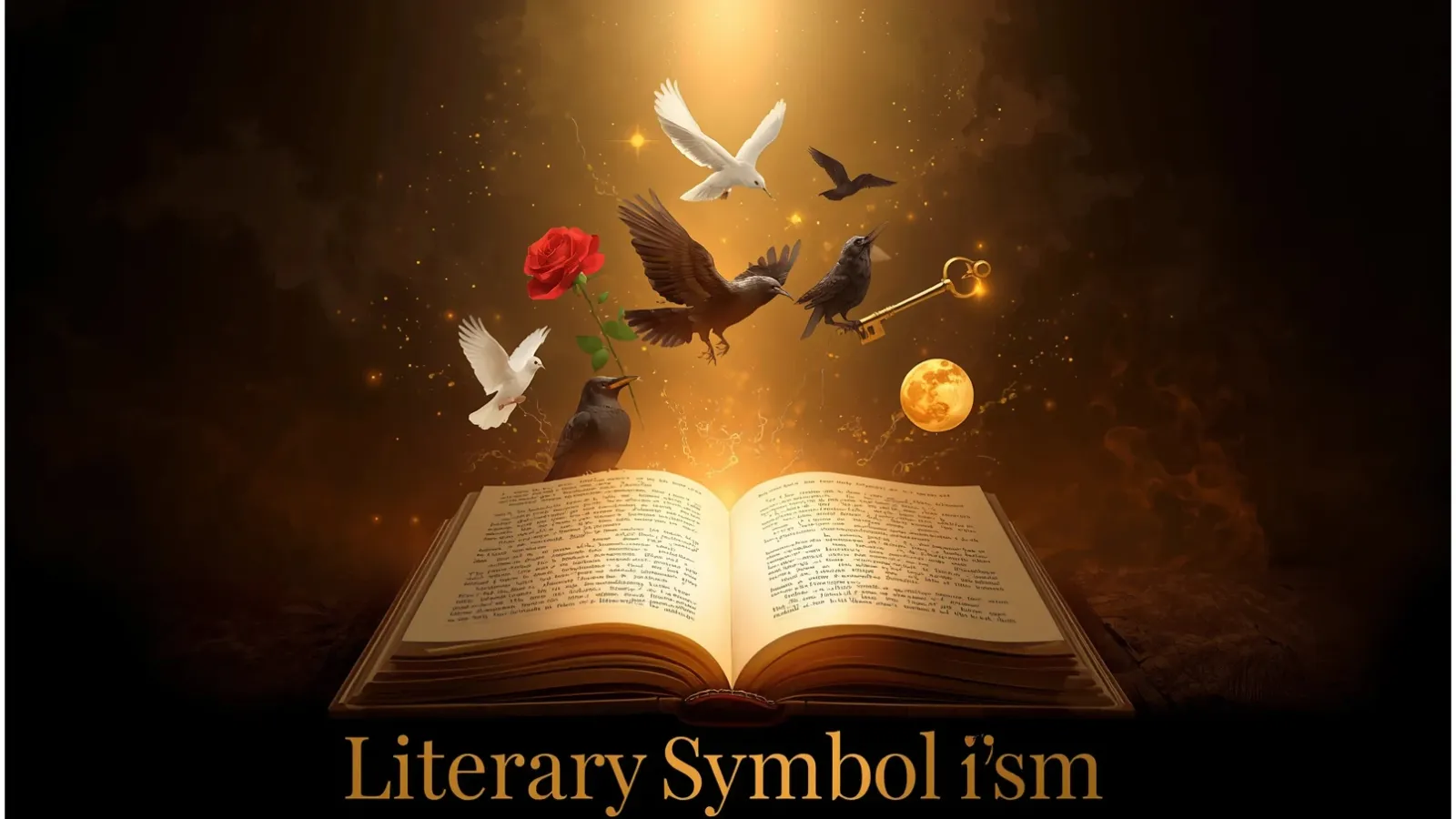
Sometimes a story says much more than the words on the page. A rose may represent love. A dark road may suggest uncertainty. A sunrise may point toward hope or a fresh beginning. These objects can look simple, but writers often use them to carry deeper ideas.
That is the heart of literary symbolism.
Imagine reading a story about a lonely person walking through a forest. At first, the forest may seem like nothing more than a setting. But if the character becomes calmer as the trees become brighter, the forest may also represent healing, growth, or a journey into the unknown.
Learning to notice these hidden meanings can make reading feel completely different. Instead of only asking what happens in a story, you begin to ask what those events, objects, colors, animals, and places might mean beneath the surface.
In this guide, we will explore literary symbolism examples, the literary symbolism definition, and how symbolism can add emotional and spiritual depth to writing.
Literary Symbolism Examples
One of the easiest ways to understand literary symbolism is through familiar examples. A symbol is usually something concrete that points toward a larger idea.
Here are several common examples:
- Rose: Often represents love, beauty, passion, or romance.
- Dove: Can symbolize peace, innocence, or spiritual hope.
- Storm: May represent emotional conflict, fear, change, or trouble.
- Sunrise: Often suggests hope, renewal, or a new beginning.
- Winter: Can represent loneliness, sadness, endings, or stillness.
- Spring: Often symbolizes growth, youth, healing, and rebirth.
- A broken mirror: May represent a damaged identity or fractured self-image.
- A road: Can symbolize a life journey, choice, or personal growth.
- A cage: May suggest restriction, fear, or a lack of freedom.
- Water: Can represent cleansing, transformation, emotion, or spiritual renewal.
- Light: Often points toward truth, knowledge, hope, or goodness.
- Darkness: May symbolize fear, confusion, grief, secrecy, or the unknown.
The meaning of a symbol is not always fixed. A snake, for example, may represent danger in one story but transformation and renewal in another.
This is important because symbolism depends on context.
A writer may place a bird inside a cage to show a character who feels trapped. Later, that same bird might be released to represent freedom. The physical object stays the same, but its meaning changes as the story develops.
Literary Symbolism Definition Examples
The literary symbolism definition becomes easier when we separate the two ideas.
Literary means something connected with written works such as novels, poems, short stories, and plays.
Symbolism is the use of something visible or concrete to represent an additional idea, feeling, quality, or message.
Together, literary symbolism means using an object, person, animal, place, action, color, or event to suggest a deeper meaning beyond its literal role.
For example, suppose a character keeps an old photograph of their family.
Literally, it is simply a photograph.
Symbolically, it could represent:
- Memory
- Love
- Loss
- Family connection
- The passage of time
- Longing for the past
The writer does not always need to explain the meaning directly. Readers discover it by looking at how the object appears throughout the story.
This is what makes symbolism powerful. It allows writers to communicate complex feelings without explaining every emotion.
A single object can sometimes say what an entire paragraph cannot.
Literary Symbolism Definition
A simple literary symbolism definition is this:
Literary symbolism is a writing technique in which something concrete represents a deeper idea, emotion, theme, or message.
The symbol may be an object, animal, color, place, person, action, or event.
For example, a character standing at a doorway may simply be entering a room. But if the story repeatedly shows doorways whenever the character faces an important decision, the doorway may symbolize choice, transition, or a new stage of life.
Symbolism is especially useful because humans naturally connect images with emotions.
A candle can feel warm and comforting. A storm can feel threatening. An empty chair can create a feeling of absence. A path disappearing into the distance can create curiosity about the future.
Writers use these natural emotional reactions to make their stories stronger.
Common Types of Literary Symbols
Symbolism can appear in many forms.
Objects:
A ring may represent commitment, while a key may symbolize opportunity or access.
Animals:
A butterfly may suggest transformation. An owl might represent wisdom. A wolf may symbolize independence or danger depending on the story.
Colors:
White may suggest purity or peace, while black can represent grief, mystery, or power.
Places:
A garden may symbolize growth. A desert may suggest loneliness or spiritual testing.
Nature:
Rain can represent sadness, cleansing, or renewal. Mountains may symbolize challenges or achievement.
Actions:
Planting a seed may represent hope and the beginning of something new.
The key is to consider what the symbol means within the specific story.
What Is Literary Symbolism?
If you are wondering, what is literary symbolism, think of it as a second layer of meaning.
The first layer is what literally happens.
The second layer is what those events may represent.
Imagine a story where a young woman plants a small tree after losing someone she loves. On the surface, she is simply planting a tree.
But the tree may represent her decision to continue living, healing, and growing despite her grief.
As the tree grows throughout the story, readers may see a connection between the tree and the character’s emotional recovery.
This creates a powerful form of storytelling because the reader experiences the meaning instead of simply being told about it.
Why Writers Use Symbolism
Writers use symbolism for several reasons.
First, it creates emotional depth. A simple object can remind readers of complicated feelings.
Second, it makes stories memorable. Readers may forget a small detail, but they often remember a powerful image.
Third, symbolism allows readers to participate. Instead of receiving every answer, readers can interpret clues and form their own understanding.
Finally, symbolism can communicate ideas that are difficult to explain directly.
A character might never say, I am afraid of change. Instead, the writer might repeatedly show the character standing outside a locked door.
That door quietly communicates the character’s inner struggle.
Symbolism and Spiritual Meaning
Symbolism can also have a spiritual side.
Many people naturally connect certain images with ideas such as hope, healing, faith, transformation, peace, and renewal.
A sunrise might remind someone that difficult nights eventually end. A river may feel like a symbol of moving forward. A butterfly may inspire thoughts about transformation and becoming a new version of oneself.
However, spiritual symbolism is personal. The same image may mean different things to different readers.
A river could symbolize peace for one person and fear for another.
Your own experiences can influence how you understand a symbol.
How to Find Symbolism in a Story
You do not need to be an expert to identify symbols.
Start by noticing things that appear repeatedly.
Ask:
- Does an object appear more than once?
- Does a color receive unusual attention?
- Does an animal behave in an important scene?
- Does a place change as the character changes?
- Does an ordinary object receive strong emotional attention?
- Does an image appear at the beginning and end?
- Does the character react strongly to something that seems ordinary?
Repeated details are often clues.
Next, consider the character’s emotions. If a particular object appears whenever the character feels lonely, it may have symbolic importance.
Finally, look at the larger theme. If a story is about forgiveness, an old locked box might represent painful memories that the character has not yet opened.
Real-Life Scenarios
Scenario 1: The Old Photograph
A young man finds an old photograph of his parents while cleaning his childhood home.
He feels sadness, but he also smiles.
The photograph is more than paper. For him, it represents family, memory, love, and time.
Its symbolic meaning becomes stronger because of his emotional response.
Scenario 2: The Growing Plant
A woman begins caring for a small plant during a difficult period in her life.
At first, the plant almost dies. She continues watering it, and eventually new leaves appear.
The plant can symbolize healing, patience, resilience, and hope.
Its growth mirrors her own emotional journey.
Scenario 3: The Open Door
A student is afraid to leave home for a new opportunity.
Throughout the story, he keeps looking at the door but hesitates to walk through it.
Eventually, he opens the door and steps outside.
The door becomes a symbol of courage, change, opportunity, and a new beginning.
FAQs About Literary Symbolism
1. What is literary symbolism in simple words?
Literary symbolism is when a writer uses something such as an object, animal, color, or place to represent a deeper idea or feeling.
2. What are some common literary symbolism examples?
Common examples include roses representing love, storms representing conflict, roads representing journeys, light representing hope, and cages representing restriction.
3. Can one symbol have different meanings?
Yes. Symbolic meaning depends on the story, culture, character, and situation. A snake, for example, can represent danger, wisdom, transformation, or temptation.
4. How can I identify symbolism in a story?
Look for repeated objects, unusual details, important colors, animals, places, or images. Then consider how they connect with the character’s emotions and the story’s main theme.
5. Why is symbolism important in literature?
Symbolism gives stories deeper meaning. It helps writers communicate emotions and themes in creative ways while allowing readers to think, interpret, and connect personally with the story.
Conclusion
Literary symbolism gives ordinary things extraordinary meaning. A flower can become a reminder of love. A road can become a picture of life’s journey. A storm can reflect an emotional struggle, while a sunrise can quietly whisper that hope is still possible.
The beauty of symbolism is that it does not force one single interpretation. It invites you to look closer.
When you read a story, notice the small things. Watch the colors, animals, objects, weather, places, and repeated images. Sometimes the detail that seems least important carries the deepest message.
And perhaps that is why symbolism feels so powerful. Life itself is full of moments that seem ordinary until we connect them with our own memories and emotions. A photograph can hold a lifetime. A simple road can remind us of how far we have traveled. A tiny seed can represent faith in tomorrow.
Once you begin looking beneath the surface, stories become richer, emotions become clearer, and familiar images can speak in an entirely new way.

Olivia Bennett is a writer specializing in flower, plant, tree, herb, and fruit symbolism. At Rankovistor, she explores the traditional and cultural meanings associated with plants and explains how their symbolism has developed across different societies and historical periods. Her articles cover everything from individual flowers and trees to colors, seasonal plants, herbs, fruits, and botanical imagery. Olivia aims to present symbolic meanings in a balanced and easy-to-follow way, especially when a plant has different interpretations across cultures. She combines an interest in botanical traditions with careful research to create informative guides for readers interested in nature, symbolism, and cultural meaning.